
Bids built from a walkthrough
Photos, a floor plan or handwritten counts become areas and fixtures. Frequency options are priced side by side so the client chooses a service level rather than haggling over a total.
A janitorial contract is won on a bid you had to produce in two days, kept by documentation nobody has time to write, and lost after a single missed shift. Timber prices the walkthrough using your production rates, bills the recurring scope on schedule, and keeps a record you can put in front of a property manager.
Night shift · week of 14 Oct
2 gaps · coverage draftedPer sq ft
Bids are built from your production rates rather than an estimate
Recurring
Monthly invoices go out on schedule without anyone chasing them
On record
Inspections and complaints are closed in writing on the account
The work was done. There was simply nothing on record to show the property manager when he decided that it had not been.
Square footage by surface, fixture counts, frequency, loaded labor, supplies and margin all have to be worked out. Every RFP wants the number this week, and the walkthrough notes are still photos on your phone.
A tenant asks whether you can also do the windows while you are there. It becomes part of the routine, it never becomes a line item, and six months later you are cleaning a bigger building for the original price.
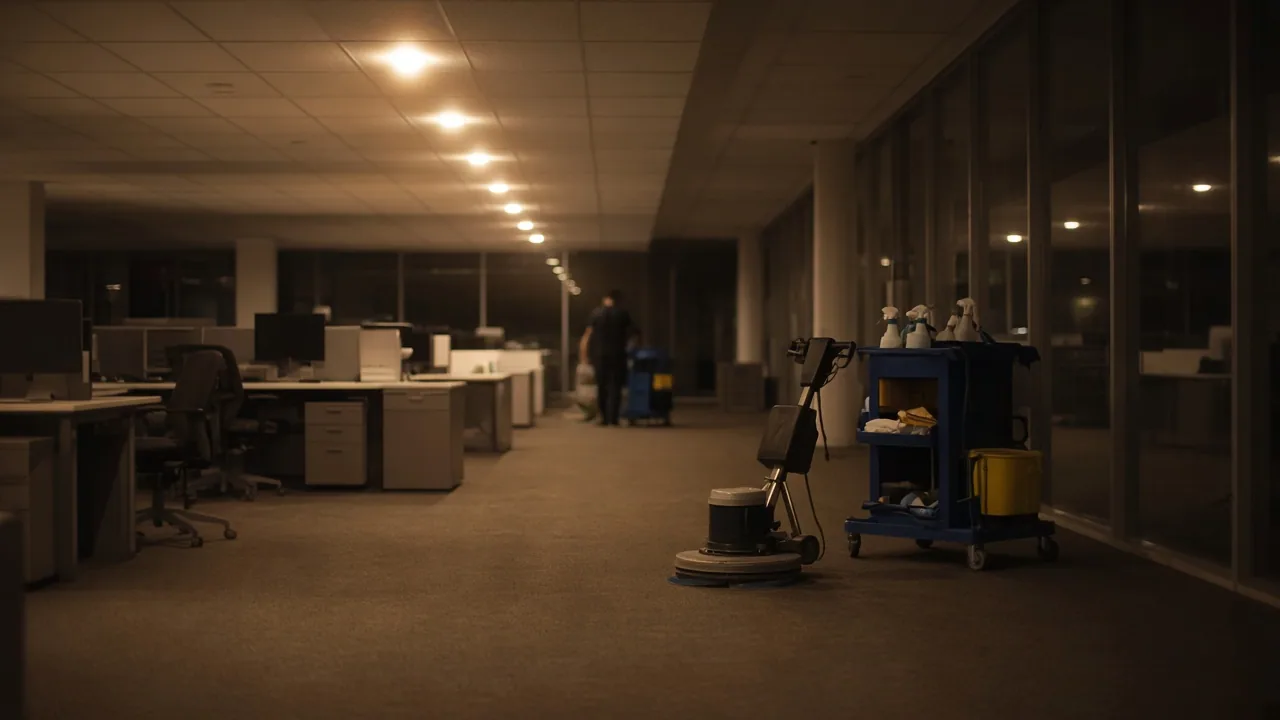
A cleaner does not arrive at six in the evening. Nobody in the office finds out until a tenant emails at eight the next morning, and that is the story the property manager repeats at renewal.
A complaint about the lobby was raised in March and handled by a supervisor, but it was never written down. At renewal it is your recollection against the client's, and the incumbent contractor tends to lose that argument.
Most cleaning bids are lost on presentation rather than price. A number that shows the areas, the frequencies and the production assumptions behind it reads like a company that will still be trading in year three.
Send walkthrough photos, a floor plan, or just the counts you wrote down. Timber breaks the building into cleanable areas, applies your production rates, and prices the frequency the RFP asked for, along with the periodic work that carries most of the margin.
Every building sits on one shift board. Timber knows who is trained for the medical site and who holds the floor machine ticket. When somebody calls out, it drafts the coverage message to the people who are actually able to take the shift.
Recurring invoices go out on the day they are due, with extra work attached to the request that caused it. Supervisor inspections and tenant complaints are recorded on the account with photos, so renewal is a document rather than an argument.

A cleaner calls out at four in the afternoon. Timber already knows who is trained for that site, who is not on another shift, and who replies to a text message. The coverage message is drafted before you have finished reading the call-out.
Extraction, window washing, pressure washing and floor work sit on a schedule with a price against each account. Timber raises them before the season starts rather than after the client has asked someone else.
The same software handles eight offices on a nightly scope and one hospital wing with a compliance binder.
Square feet per hour by surface, your loaded wage and your supply percentage. Timber prices with the numbers you already use and shows them on the bid, so you can discuss it line by line instead of defending a single total.
Stays with you
Timber prices from your rates and shows the arithmetic. What you mark it up to is your decision, and it will not quietly discount in order to win.
Stays with you
It tracks training, clearance and availability, and proposes coverage. Hiring, firing and deciding who you trust in a medical suite stay with you.
Stays with you
It drafts the difficult email about scope creep. You decide whether that account gets the firm version or the gracious one.
Photos, a floor plan or handwritten counts become areas and fixtures. Frequency options are priced side by side so the client chooses a service level rather than haggling over a total.
Strip and wax, carpet extraction, window cleaning and pressure washing sit on a schedule with a price attached. The margin work stops being the thing you forgot to sell.
Timber knows who is trained for that site and who is not already working. It drafts the message, you send it, and the shift is covered before the tenant notices.
Check-in, check-out and photos come in by SMS or WhatsApp, in the language each cleaner uses. There is no app to install for a workforce that turns over twice a year.
Supervisor walks are scored against the scope you sold. Complaints are logged, assigned and closed. Renewal becomes a file you can open rather than a matter of recollection.
Monthly contracts invoice on schedule, extras attach to the request that caused them, and late accounts receive a drafted reminder instead of nothing.
Commercial cleaning is a business with dependable revenue and thin margins, and the margin is rarely lost on the floor. It is lost in the office: a bid built on a guess, a scope that grew for free, a shift nobody covered, an extra job nobody invoiced, and a renewal conversation with no documentation behind it.
The owner of a thirty-cleaner company is usually the estimator, the scheduler and the account manager at the same time. Adding a coordinator is a real salary against a thin margin, so instead the bids go out more slowly, the periodic work goes unsold, and complaints are handled verbally.
Timber takes on that desk. It prices the walkthrough against your production rates and shows the assumptions it used. It runs one shift board across every building and knows who is trained for which site. It invoices the recurring scope on time and attaches extra work to whoever requested it. It also keeps inspections and complaints in writing, so when a property manager says the lobby was not cleaned in March, you can open March.
Send photos or counts from a building you are bidding, along with the production rates you use. We will price it and show you the areas and assumptions behind the number. If your own rates say we are wrong, we would rather find that out now.
Or write ivan@felicita.group
Still deciding? Book a demo and we will go through your own workflow live — your documents, your rates, your schedule.
It turns photos, a floor plan or your own counts into cleanable areas and fixtures, then prices them with your production rates. You correct any area it got wrong, and every one of them is shown rather than buried in a total.
Other work Timber runs
Send in a walkthrough and get back a bid you can defend. Shifts get covered, periodic work gets sold, and renewals are backed by a file.
No credit card to start. Cancel any time.